Hello everyone! Today, I’m going to share my personal top 5 best house spiders.
Important information for residents of Australia and New Zealand: we will mostly be talking about spiders common in Europe and North America. Oh, and yes, all 5 spiders are venomous, but they won't just bite a human for no reason - only if provoked - and their venom is not fatal. In any case, you shouldn't touch or catch a spider with your bare hands. If one is bothering you, use the time-tested cup and cardboard method.
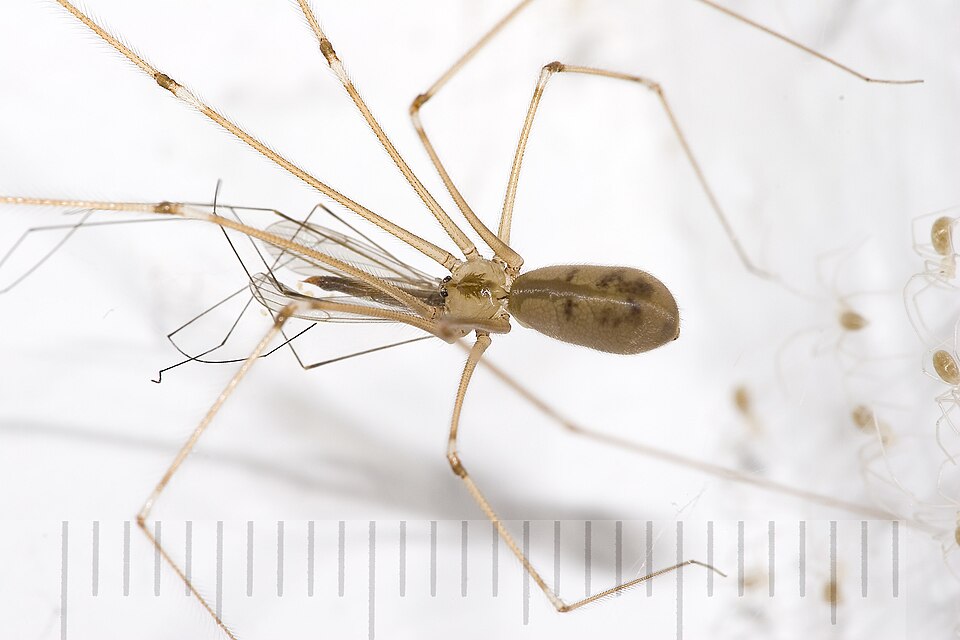
1. Cellar Spider Pholcus phalangioides
🖼️ by_OleiPholcus_phalangioides_6908.jpg
Heading our top list is the cellar spider - the ultimate perfect roommate. This guy put all his evolutionary points into incredibly long, thin legs, a small body, and loose, messy cobwebs in the corners of ceilings, basements, and bathrooms. It preys on tiny insects and even other spiders.
Parameters: Body length - approximately 7-10 mm Leg length - up to 5-6 cm Lifespan - up to 3 years Hunting method - cobweb snare
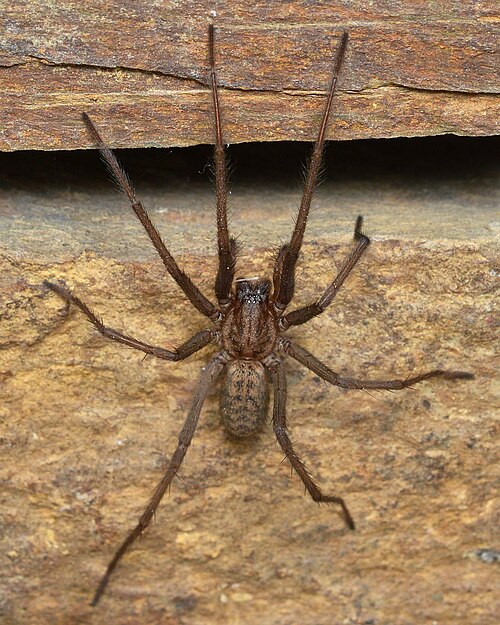
2. Giant House Spider Eratigena atrica and related species
🖼️ by_Ryan_Hodnett_giant_spider.jpg
A large brown spider with long legs that hangs out in basements, garages, and occasionally living areas. It weaves funnel-shaped webs and catches small arthropods. Despite its intimidating size, it is very shy around humans. You are especially likely to notice these spiders in late summer and autumn, when males actively start searching for mates.
Parameters: Body length - approximately 10-16 mm Leg span - in males can reach a few centimeters, sometimes around 7-8 cm Lifespan - males usually live about 1.5 years, while females can live 2 years or longer Hunting method - web with a funnel-shaped retreat
3. Common House Spider Parasteatoda tepidariorum
🖼️ by_Daniel_fox123.jpg
The hero in third place is a small spider with a rounded abdomen, which frequently sets up a chaotic tangled web in the corners of windows, closets, and garages. It can reside in a building for a long time, meaning it keeps catching small pests for months.
Parameters: Body length - approximately 3.5-7.5 mm Leg span - depends on the gender and size of the individual; noticeably larger than the body length Number of eggs per sac - can reach up to around 400 Hunting method - tangled cobweb
A tiny assassin with massive front eyes. He isn't like an old man quietly ice fishing; he is an athlete that stalks his prey and then makes a highly precise leap onto it. They are typically found near windows, on walls, and around houseplants.
Parameters: Body length - varies by species; for many small species, it is just a few millimeters Vision - jumping spiders are renowned for exceptionally well-developed eyesight among spiders Hunting method - active stalking and pounce/jump on prey Web - not used for hunting, but silk is utilized as a safety dragline and for building shelters
Closing out our top list is the sector spider. This character is often encountered near windows and on the external frames of buildings. It spins a circular orb web with a missing sector, connected via a signal thread to its hideout.
During the day, it usually hides in its retreat waiting for prey. When an insect flies into the web, the spider feels the vibrations along the signal thread and rushes out to inspect the catch. If necessary, the spider also repairs its web.
Parameters: Female body length - approximately 5-11 mm Adult female lifespan - about 5-7 months Hunting method - circular orb web with a missing sector and a signal thread Primary prey - small flying insects
Well, my list has come to an end. That's all from me!
Hey everyone! I decided to dive into NLP (Natural Language Processing) and found a dataset containing real and fabricated news articles for a starting project. My goal was to train a model to distinguish fake news from authentic publications.
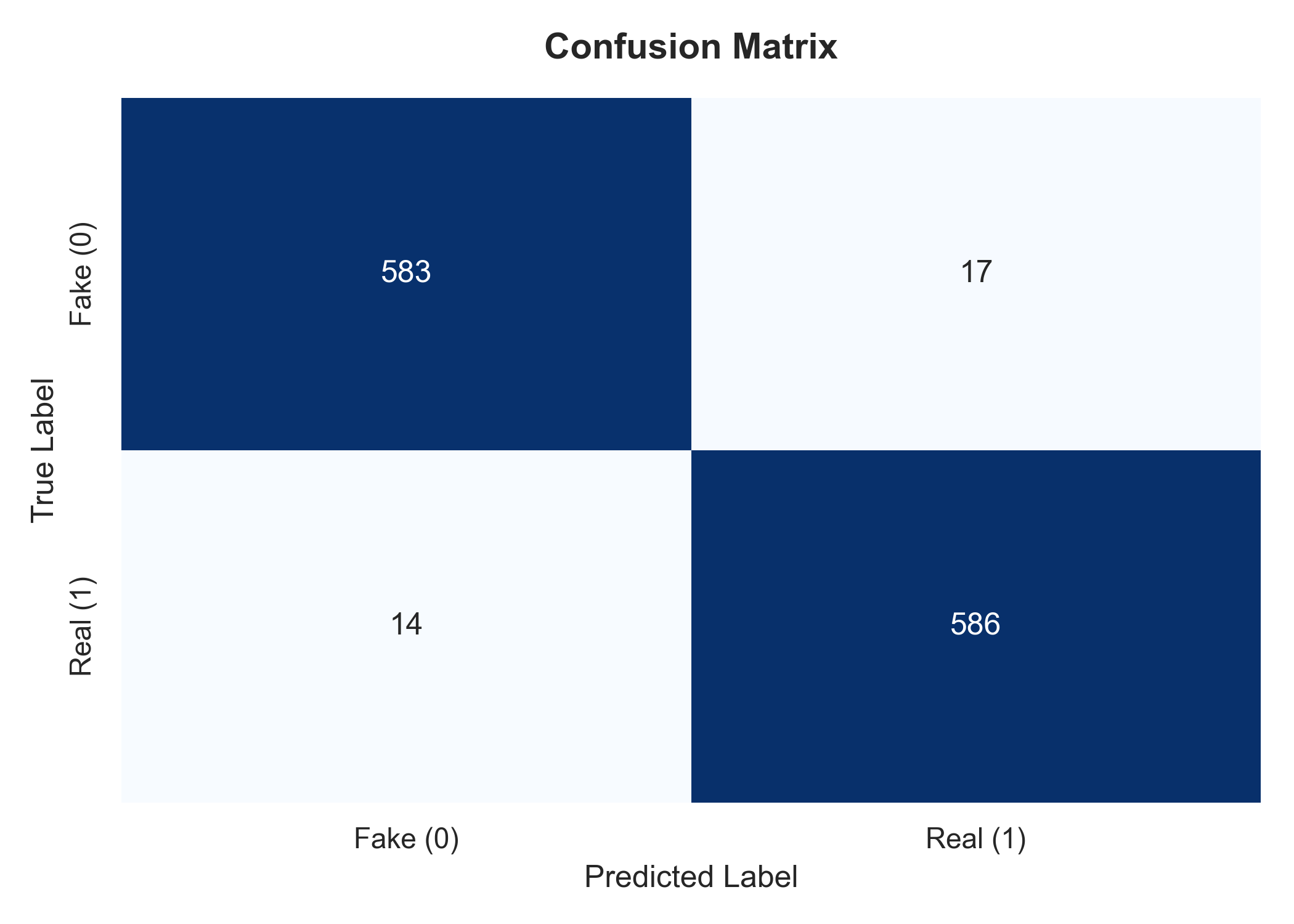
For implementation, I used a combination of TF-IDF Vectorizer and Logistic Regression from scikit-learn. On the test set, the model achieved an impressive 97.25% accuracy. However, things got really interesting when testing the exact same fabricated story phrased in four different ways:
“BREAKING: Germany Bans Smartphones in All Schools and Universities Starting 2027” → Real
“Germany to Introduce Nationwide Smartphone Ban in Schools and Universities in 2027” → Real
“Federal Government Announces New Restrictions on Smartphone Use Across German Education System” → Real
“Germany Plans to Eliminate Personal Smartphone Use in Educational Institutions Starting in 2027” → Fake
🖼️ confusion_matrix.png
Notice that despite the high accuracy score, the model remains vulnerable. Its decision is heavily influenced by key phrases and stylistic cues:
"BREAKING" and "Nationwide" mimic the style of breaking news alerts.
"Federal Government Announces" sounds like an official press release.
"Plans to Eliminate" uses word combinations more frequently associated with fake samples in the training set.
Consequently, the classifier evaluates writing style and n-grams while completely missing actual factual manipulation, numbers, or dates.
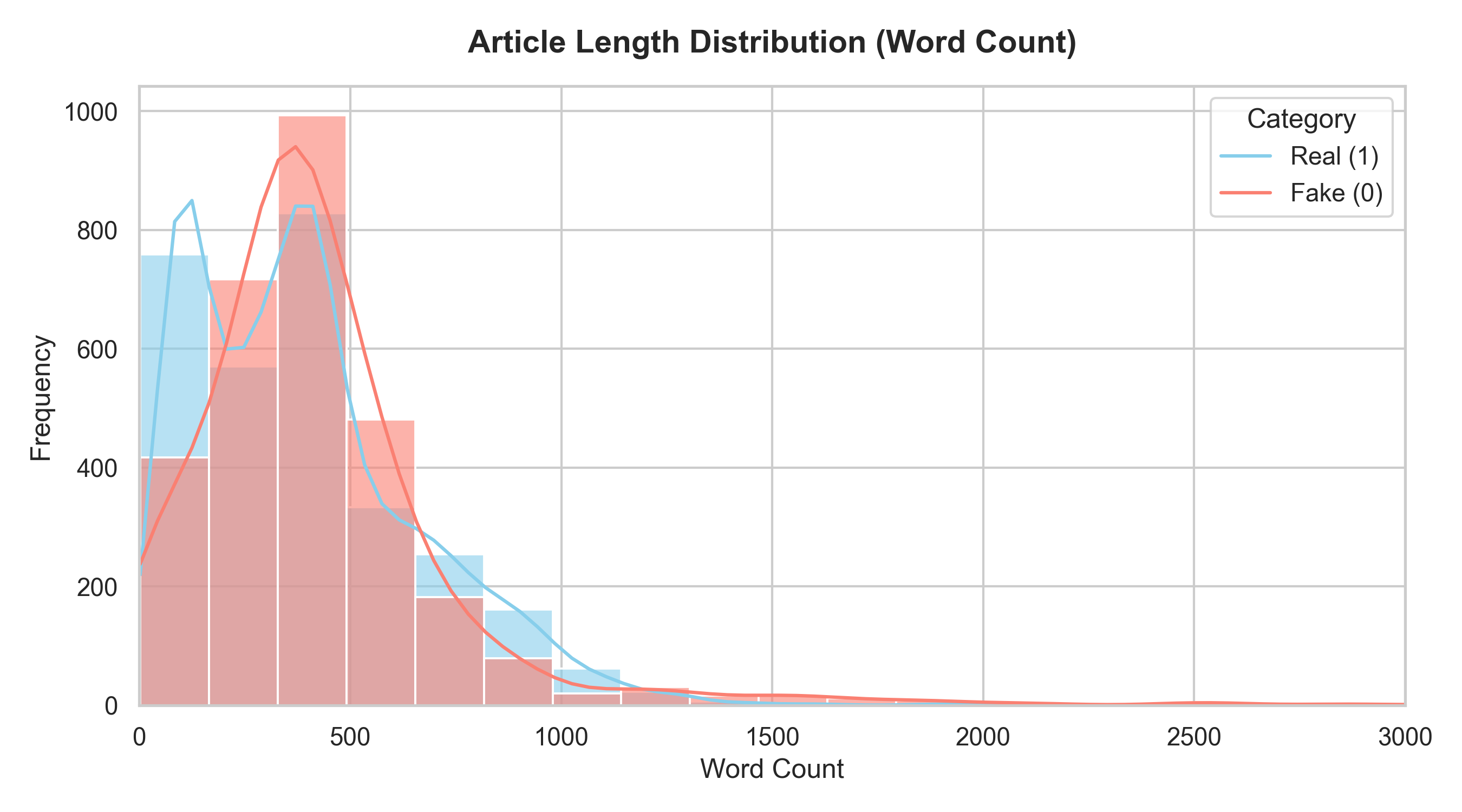
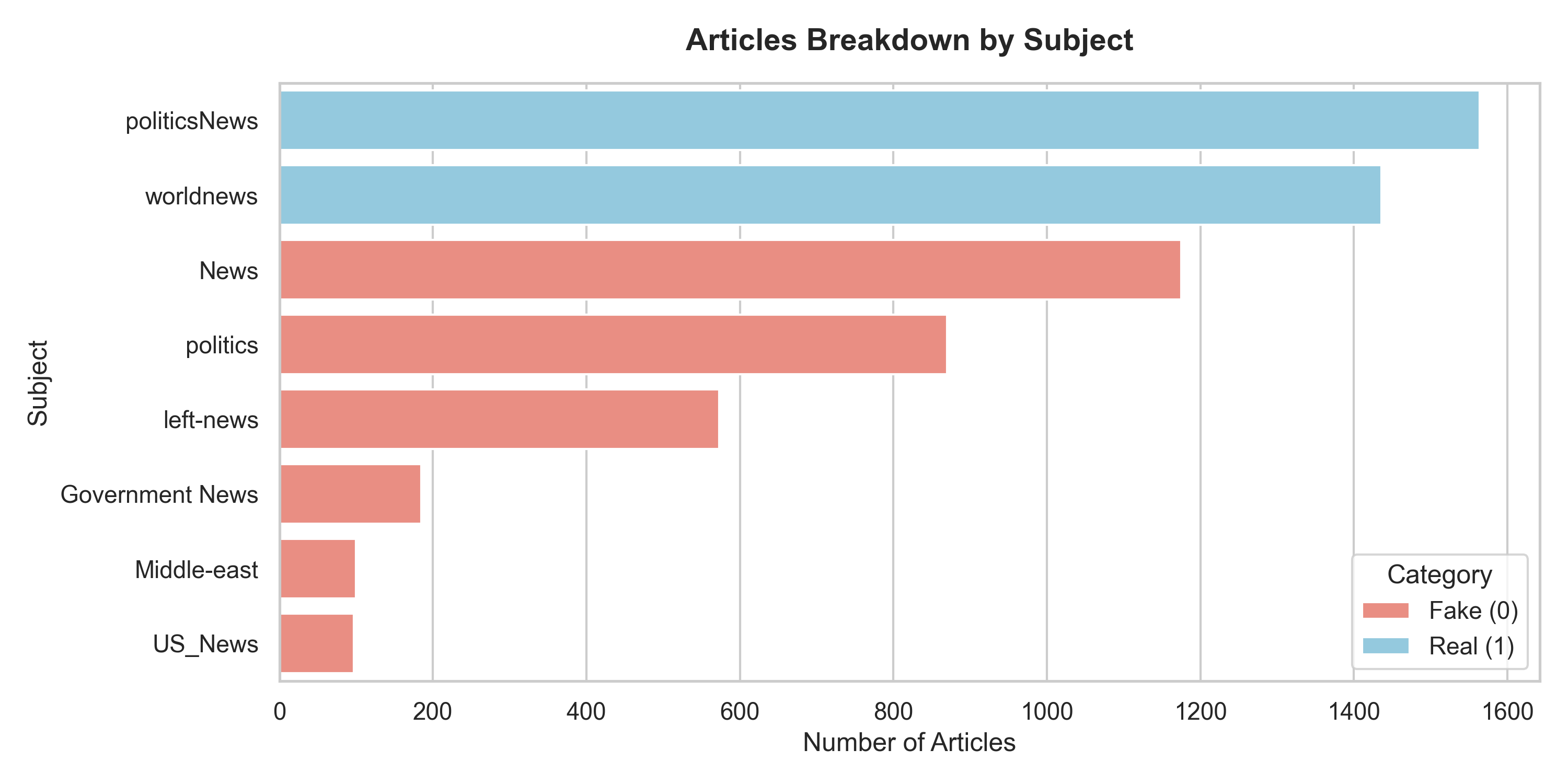
🖼️ word_count_distribution.png
🖼️ subjects_breakdown.png
In conclusion, it is impossible to reliably determine whether a news story is true based solely on its phrasing. A full-fledged fake news detection system must include fact-checking capabilities and cross-source verification.
The source code for fake_news_detector.py is available on GitHub. Feel free to check it out and share your thoughts!
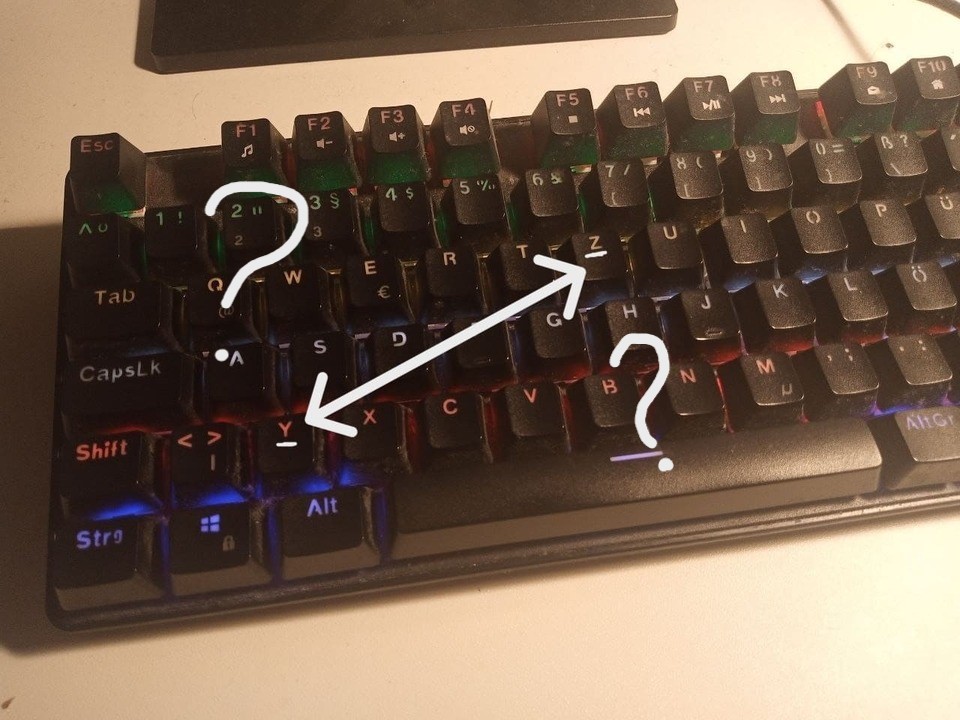
If you have ever used the German keyboard layout in combination with the English one, you have most likely fallen into this trap: you press Z - you get Y, you press Y - you get Z.
And your first thought is something like: "Why?! Why are Y and Z flipped?!"
In fact, the story behind this rearrangement is quite simple - and it began long before computers.
🖼️ image-01.jpg
The modern English QWERTY layout appeared in the era of mechanical typewriters. In the 1870s, it was used on Remington typewriters, and it gradually became established as the standard for the English language.
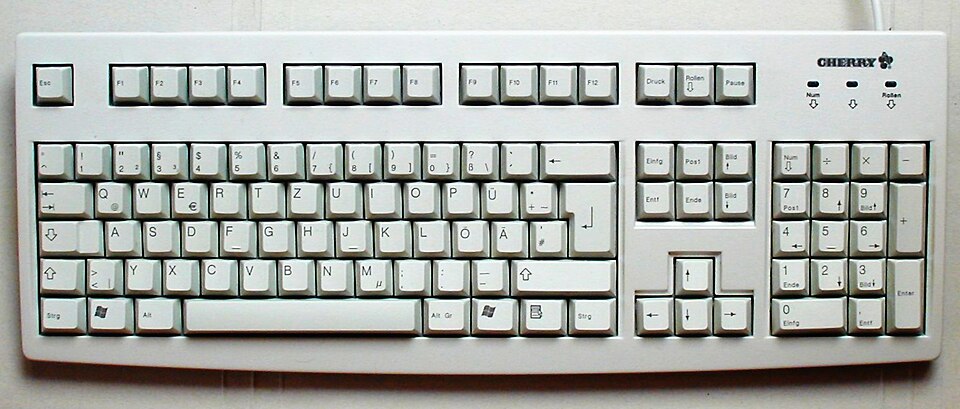
When typewriters reached German-speaking countries, it turned out that one change could be made to the English layout to improve it for Germans. In the German language, the letter Z is used more frequently than Y, which often appears at the end of English words. Therefore, in the German QWERTZ layout, these two keys were swapped.
🖼️ image-02.jpg
And it wasn't some grand mathematical discovery like "we analyzed a billion German words and calculated the perfect layout." Most likely, German typewriter manufacturers simply looked at the keyboard and, through a quick visual analysis, decided to lock in the QWERTZ option. And then it simply migrated to computer keyboards.
So, every time you press Ctrl + Z and nothing happens, and then you realize that you have the German layout turned on, remember that it's not a bug - it's a feature.
From Yellow-and-Green Curbs to Granite: How Moscow Changed in the 2010s
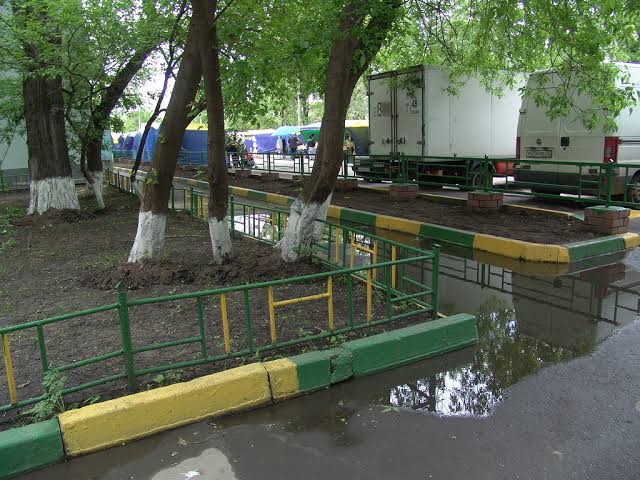
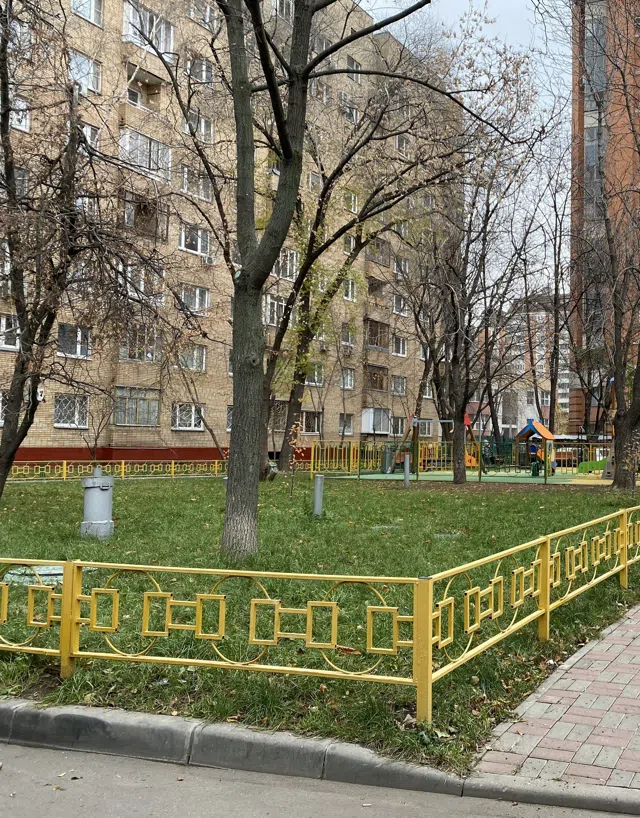
Episode 1. Yellow-Green Moscow: Late 2000s - Early 2010s Moscow in the late 2000s differed noticeably from the city today. On the streets, there were many mismatched signs, advertising structures, fences, garages, commercial pavilions, and various other unauthorized constructions, while the improvement of courtyards and streets largely consisted of separate local solutions and neighborhood initiatives. Painted curbs and fences became one of the most prominent elements of this urban design.
Yellow-green curbs, fences, and other landscaping elements became widespread in Moscow. In 2012, Deputy Mayor Pyotr Biryukov explained the use of these colors by stating that yellow is well-perceived by visually impaired people, while green is associated with nature. In practice, this color scheme became one of the most recognizable elements of Moscow landscaping at the time-one could even say it was less about public landscaping and more about pure design.
🖼️ image-01.jpg
At the same time, a whole culture of yard and lawn decoration existed. Trees were often whitewashed or painted at their bases, fences and small architectural features were covered in bright paint, and flowerbeds featured decorative figures, frequently made from car tires. Without any sarcasm and in all seriousness, this street art deserves a publication of its own. All this made it possible to alter the appearance of a courtyard or street relatively quickly without a large-scale reconstruction of the area.
By the early 2010s, this approach gradually began to fade into the past. The abundance of painted surfaces and scattered decorative elements was replaced by the concept of a more uniform street design. Increasingly, the curb began to be viewed not as a standalone object that needed to be highlighted with color, but as part of the overall urban environment.
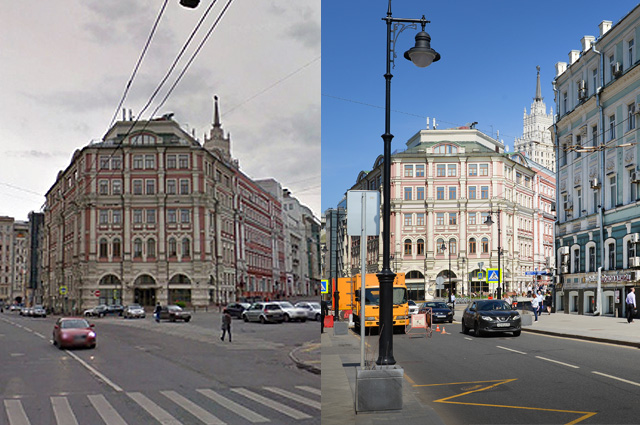
Episode 2. From Yellow Paint to Gray Monolith: 2013-2015 Simultaneously with the appearance of Moscow's first design codes, the look of landscaping elements began to change as well. In 2013, Art. Lebedev Studio developed an architectural and artistic concept for placing advertising and information structures on Moscow's central streets. The project covered 11 streets in the historic center and became one of the first steps toward a more uniform design of the urban environment.
A similar process was occurring with curbs. In 2015, Moscow began to gradually phase out regular painting, and in certain areas, yellow-green curbs began to be repainted gray. Instead of bright paint, the natural color of the material itself-whether concrete or stone-was increasingly used, and efforts were made to integrate landscaping elements into a unified color scheme for the street.
🖼️ image-02.jpg
As a result, the yellow-green scheme gradually ceased to be the primary method for designing urban areas. It was replaced by a more restrained format: gray curbs, neutral fencing, uniform requirements for their shape, and a gradual phase-out of painting tree trunks and other surfaces that used to be regularly highlighted with paint.
Episode 3. The "My Street" Era: 2015-2018 In 2015, the "My Street" program began, under which streets, sidewalks, and squares were reconstructed, and utility networks, lighting, and landscaping elements were updated. It was during this period that gray concrete and paving tiles became some of the primary visual materials of a renewing Moscow. Old curbs and fences were replaced with new ones, and the street itself began to be perceived as a cohesive whole rather than a collection of separate elements.
🖼️ image-03.jpg
In this new system, the curb was, on the contrary, supposed to avoid drawing attention to itself. Its task was to become a part of the street surface in order to blend with the sidewalk, roadway, lawn, and fencing. Instead of yellow and green paint, gray granite appeared; instead of a large number of painted fences, more uniform metal structures were introduced; and whitewashed or painted tree bases gradually disappeared from central urban spaces.
Against the backdrop of this restructuring, the rest of the city's infrastructure was also changing. The Moscow Central Circle (MCC) was launched, the active development of the metro and surface transport continued, and the very approach to urban planning was fundamentally altered; in 2018, turnstiles finally began to be removed from buses and trams. These changes are not directly related to curbs, but they occurred simultaneously with the same transition toward comprehensive street beautification.
By the late 2010s, yellow-green curbs, bright fences, and painted tree bases had ceased to be a familiar element of the Moscow landscape. They were replaced by gray monoliths, concrete, metal fencing, and more uniform elements of urban landscaping. If one looks at Moscow through a single small object-an ordinary city curb-a rather noticeable shift in the entire approach to street design can be seen over the course of a single decade.